
A great wine cellar does more than store bottles. It sets a mood. It tells a story. It becomes a place people remember long after the last glass is poured.
Today’s homeowners want more than rows of wooden racks hidden in a basement. They want spaces that feel intentional, beautiful, and personal. That is where advanced wine cellar design comes in. When done right, it blends storage, architecture, and lifestyle into one unforgettable space.
Here’s how custom racking, glass enclosures, and tasting areas come together to create custom wine cellars that feel both practical and special.
Why Wine Cellars Have Become Design Features, Not Just Storage
Wine collecting has shifted. It is no longer only about preservation. It is about experience.
People want to see their collections. They want to walk into a room and feel the care behind every bottle. They want guests to pause and say Wow before they even reach for a glass.
This change has pushed custom wine cellars into a new category. They are no longer hidden utility rooms. They are showpieces woven into the home’s architecture.
Modern cellars often sit near dining rooms, kitchens, or entertaining spaces. Some even serve as visual anchors, drawing the eye through glass walls or dramatic lighting.
Starting With the Big Picture
Before choosing racks or finishes, it helps to step back and think about how the space should feel.
Is the goal intimate and quiet or bold and dramatic? Is this cellar meant for private enjoyment or frequent gatherings? Will it hold a growing collection or a carefully curated one?
Advanced wine cellar designs begin with these questions. They guide every decision that follows, from layout to materials to lighting.
A thoughtful plan avoids common mistakes like overcrowded racks, awkward walkways, or beautiful spaces that fail to protect the wine.
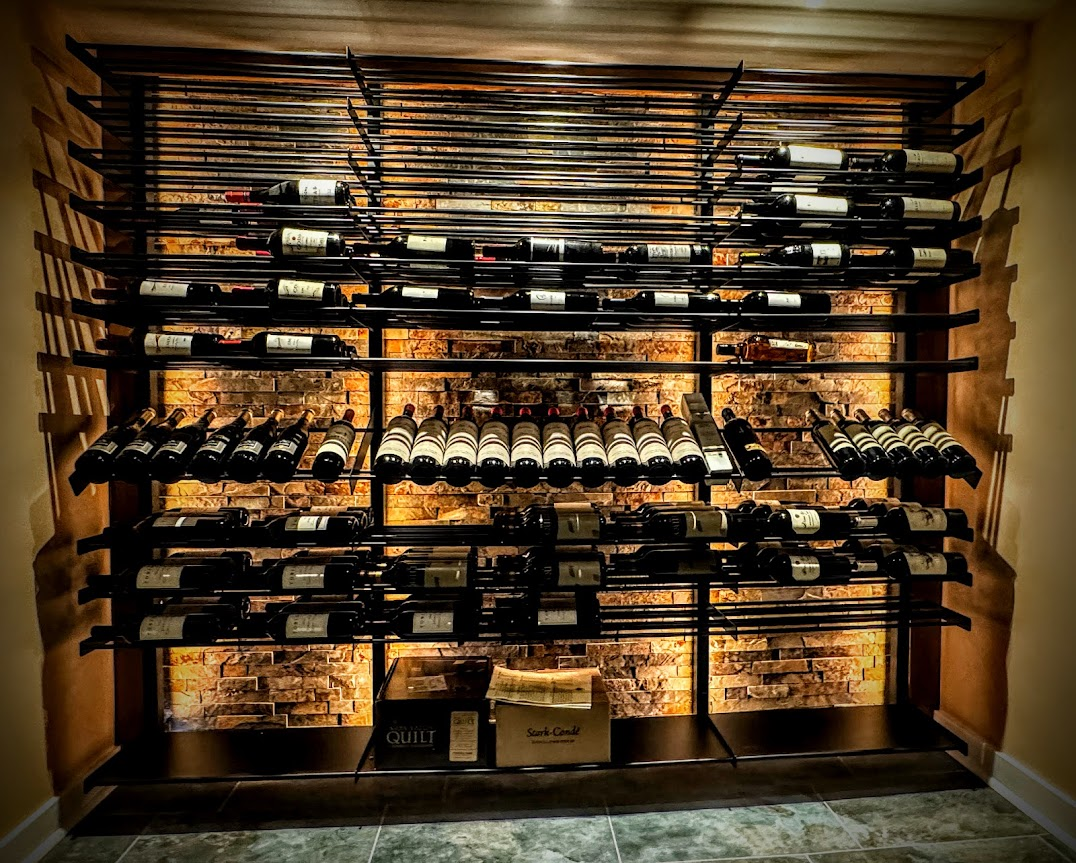
Custom Racking as Both Structure and Art
Racking is the backbone of any wine cellar. It holds the collection, organizes it, and shapes how the room feels.
Off-the-shelf racks can work in basic storage rooms. But in custom wine cellars, racking becomes architecture.
Tailored to the Collection
No two wine collections look the same. Some focus on Bordeaux bottles. Others mix Champagne, magnums, and rare formats.
Custom racks adjust spacing and angles to fit the collection, not the other way around. This improves storage density while keeping labels visible and bottles accessible.
That balance is a key part of advanced wine cellar design. It allows serious storage without sacrificing visual order.
Materials That Set the Tone
Wood remains a favorite, but the choices go far beyond traditional oak.
Walnut adds warmth and richness. Maple feels lighter and more modern. Metal introduces a clean, architectural edge.
Many designers mix materials for contrast. Wood racks framed with metal supports. Floating metal pegs against stone walls. These combinations create depth and keep large cellars from feeling repetitive.
Creating Visual Rhythm
Custom racking allows for intentional breaks in pattern. Display rows, diamond bins, and label forward sections add variety.
These moments give the eye places to rest. They also highlight special bottles without overwhelming the space.
In advanced wine cellar design, racking is never just about holding bottles. It shapes how the room flows and how the collection is experienced.
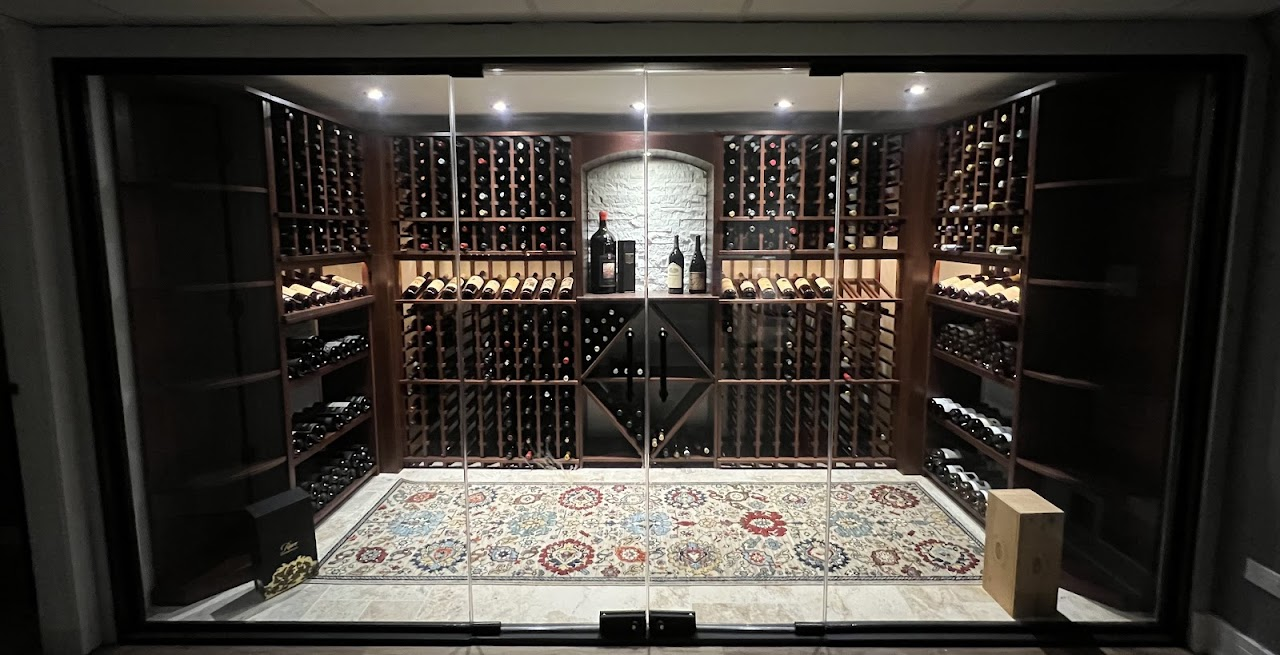
Glass Walls That Turn Wine Into Architecture
Glass has changed the way wine cellars interact with the rest of the home.
Instead of hiding the collection behind solid walls, glass enclosures invite it into view. They turn wine storage into a living design element.
Full Glass Enclosures
Floor to ceiling glass walls create a dramatic impact. They work especially well in open plan homes where the cellar becomes a visual centerpiece.
When paired with proper climate control, glass walls protect the wine while keeping it on display.
This approach is a signature move in advanced wine cellar design. It requires careful planning, but the result feels effortless and striking.
Framed vs Frameless Glass
Framed glass offers a more defined look. Metal or wood frames can tie the cellar to surrounding finishes.
Frameless glass feels lighter and more modern. It almost disappears, allowing the wine to take center stage.
Both options work beautifully in custom wine cellars when chosen with the overall style in mind.
Privacy and Light Control
Glass does not mean fully exposed. Frosted panels, tinted glass, or partial walls offer privacy while still letting light through.
Lighting plays a role here, too. Soft interior lighting inside the cellar keeps the space visible without harming the wine.
Lighting That Brings the Cellar to Life
Lighting is where many wine cellars either shine or fall flat.
The right lighting reveals texture, depth, and craftsmanship. The wrong lighting can flatten the space or harm the collection.
Layered Lighting Matters
A single overhead light rarely works. Advanced wine cellar design relies on layers.
Ambient lighting sets the overall tone. Accent lighting highlights racks and display bottles. Task lighting supports tasting areas and storage access.
Together, these layers create balance and flexibility.
LED Done Right
Modern LED systems produce minimal heat and UV exposure. This makes them ideal for wine environments.
They also offer control. Dimming, zoning, and color temperature adjustments allow the cellar to shift mood depending on the moment.
Warm light feels inviting for tastings. Cooler light can highlight architectural details when the cellar is viewed from another room.
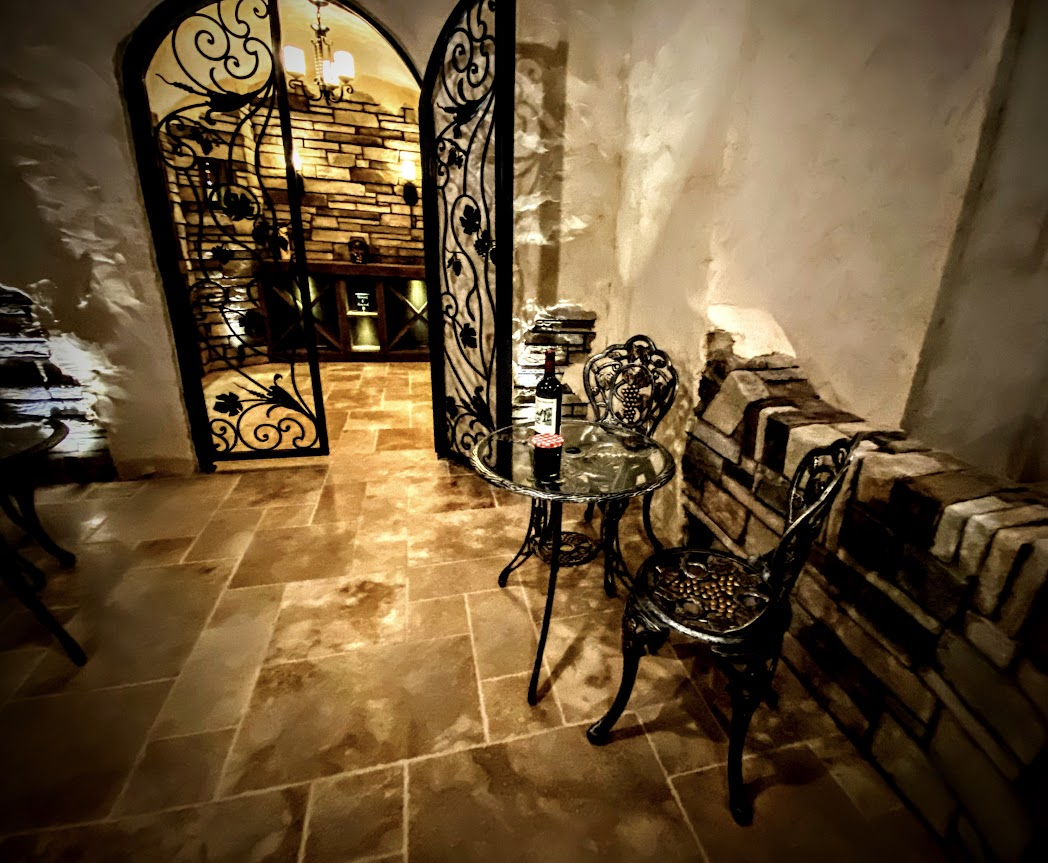
Tasting Areas That Invite People to Stay
A wine cellar becomes something special when it includes a place to sit, taste, and linger.
Tasting areas transform storage into experience. They encourage connection, conversation, and appreciation.
Integrated vs Separate Spaces
Some tasting areas sit within the cellar itself. A small table, counter, or barrel top tucked between racks.
Others live just outside the cellar. A glass enclosed wine room opening into a lounge or dining space.
Both approaches fit well within custom wine cellars when designed intentionally.
Furniture That Fits the Space
Scale matters. Oversized furniture can crowd the room. Too small and it feels temporary.
Custom tables, built-in counters, or wall-mounted ledges often work best. They preserve floor space while offering comfort.
Materials should echo the cellar’s finishes. Wood, stone, or metal create continuity and visual calm.
Making It Comfortable Without Compromising Wine
Tasting areas must balance comfort with climate needs. Proper zoning keeps seating areas pleasant without warming the storage zones.
This technical balance is another hallmark of advanced wine cellar design. It ensures the cellar works for both people and wine.
Maximizing Storage Without Feeling Crowded
Large collections require smart planning. The goal is to store more without making the space feel tight.
Vertical Thinking
Using height effectively increases capacity. Tall racks draw the eye upward and make the room feel larger.
Rolling ladders add function and charm. They also turn practical storage into a visual feature.
Strategic Aisle Planning
Walkways should feel natural, not forced. Narrow aisles may increase storage but reduce comfort.
A well-planned layout balances density and movement. This keeps the cellar enjoyable even as collections grow.
Display vs Bulk Storage
Not every bottle needs to be seen. Mixing visible racks with bulk storage zones improves efficiency.
Hidden bins or case storage behind walls or lower racks free up space for showpieces.
This layered approach is common in advanced wine cellar design because it respects both aesthetics and practicality.
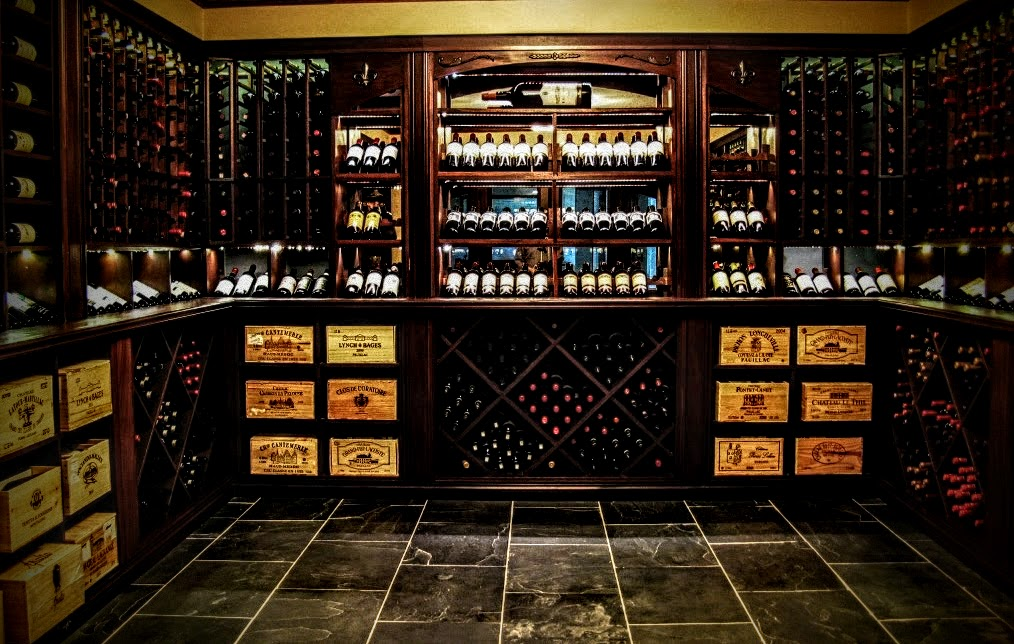
Material Choices That Elevate the Experience
Materials shape how a cellar feels before a single bottle is noticed.
Stone walls add weight and permanence. Wood ceilings bring warmth. Concrete floors feel modern and grounded.
In custom wine cellars, materials often reflect the home’s broader design language. This creates continuity rather than making the cellar feel like an afterthought.
Texture matters too. Rough stone contrasts beautifully with smooth glass. Matte finishes reduce glare and feel more relaxed.
These details may seem subtle, but they add up to a space that feels thoughtful and complete.
Temperature and Humidity Done Quietly
A stunning wine cellar still needs to do its primary job. Protect the wine.
Cooling systems should disappear into the background. Noise, drafts, or visible vents distract from the experience.
Proper insulation, vapor barriers, and climate zoning are essential parts of advanced wine cellar design.
When done right, the cellar feels calm and consistent. Guests notice the beauty, not the mechanics.
Designing for How People Actually Use the Space
The best wine cellars reflect real habits, not idealized ones.
Some collectors open bottles weekly. Others save them for special occasions. Some host large tastings. Others prefer quiet evenings.
Design choices should support those habits. Easy access racks for daily bottles. Secure zones for rare vintages. Comfortable seating for long conversations.
This human centered approach separates good cellars from great ones.
The Emotional Impact of a Well-Designed Wine Cellar
A show-stopping wine cellar changes how people feel in the home.
It creates anticipation. It invites pause. It turns routine moments into rituals.
That emotional pull is why custom wine cellars matter. They are not just storage rooms. They are spaces that celebrate patience, craftsmanship, and shared experience.
And that is the heart of advanced wine cellar design. Bringing beauty and purpose together in a way that feels natural and lasting.
When Wine Storage Becomes Part of the Home’s Identity
The most memorable wine cellars feel inevitable. As if they always belonged exactly where they are.
They reflect the owner’s taste without shouting. They balance display and discretion. They invite people in without demanding attention.
With custom racks, glass walls, and thoughtful tasting areas, a wine cellar becomes more than a room. It becomes part of how the home tells its story.
And when done well, it is a story worth revisiting, one bottle at a time.
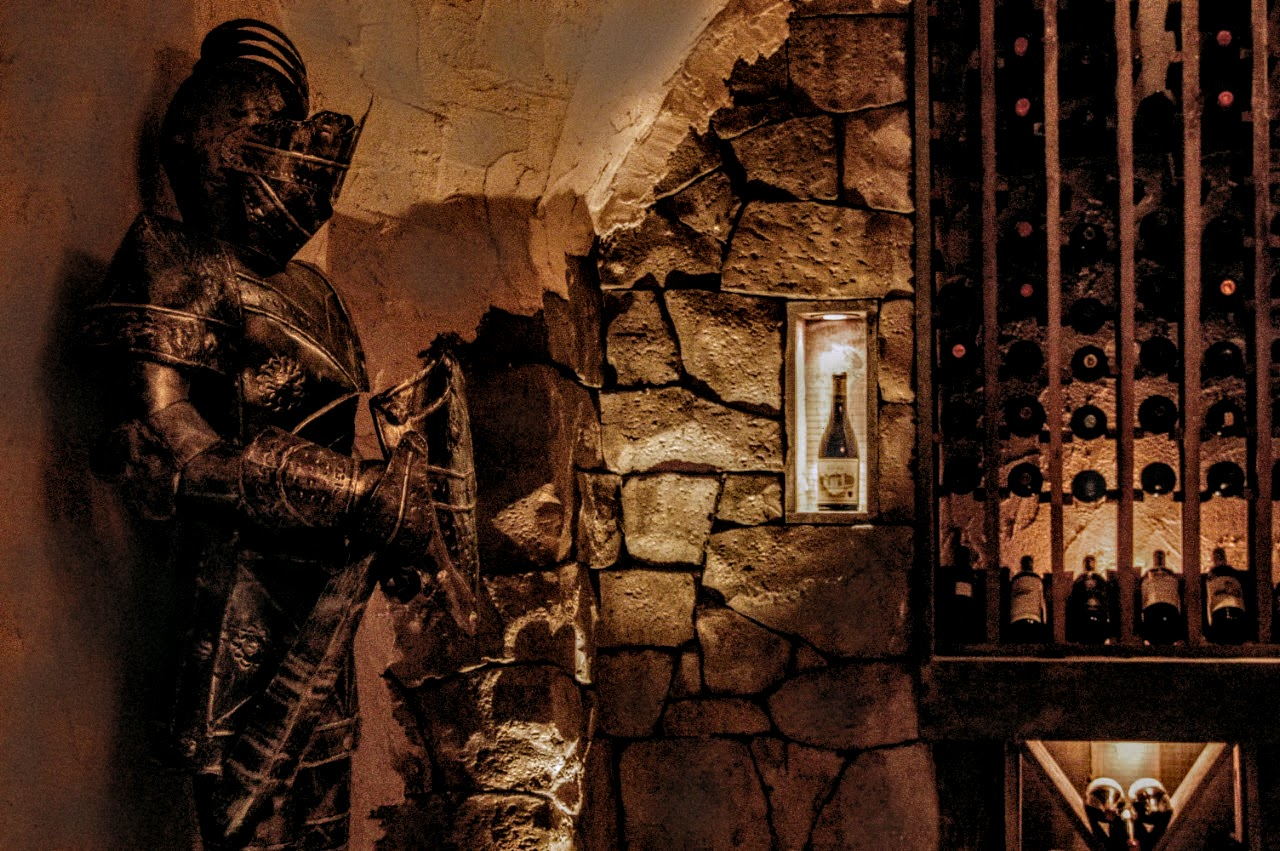
Baroque Design Custom Wine Cellars creates custom wine cellars that feel personal, functional, and timeless. From concept to completion, our team applies advanced wine cellar design principles to fit your space, style, and collection.
As leading wine cellar builders in Highland Park, they work closely with you to design a cellar that reflects how you live, collect, and entertain, no matter the size or layout of your home.
